How Care Homes Can Turn Email from a Cybersecurity Risk into a Defence

Cyberattacks on care homes often start with email. Learn how Cranborne helps care homes protect sensitive data and residents by transforming their email security strategy. 
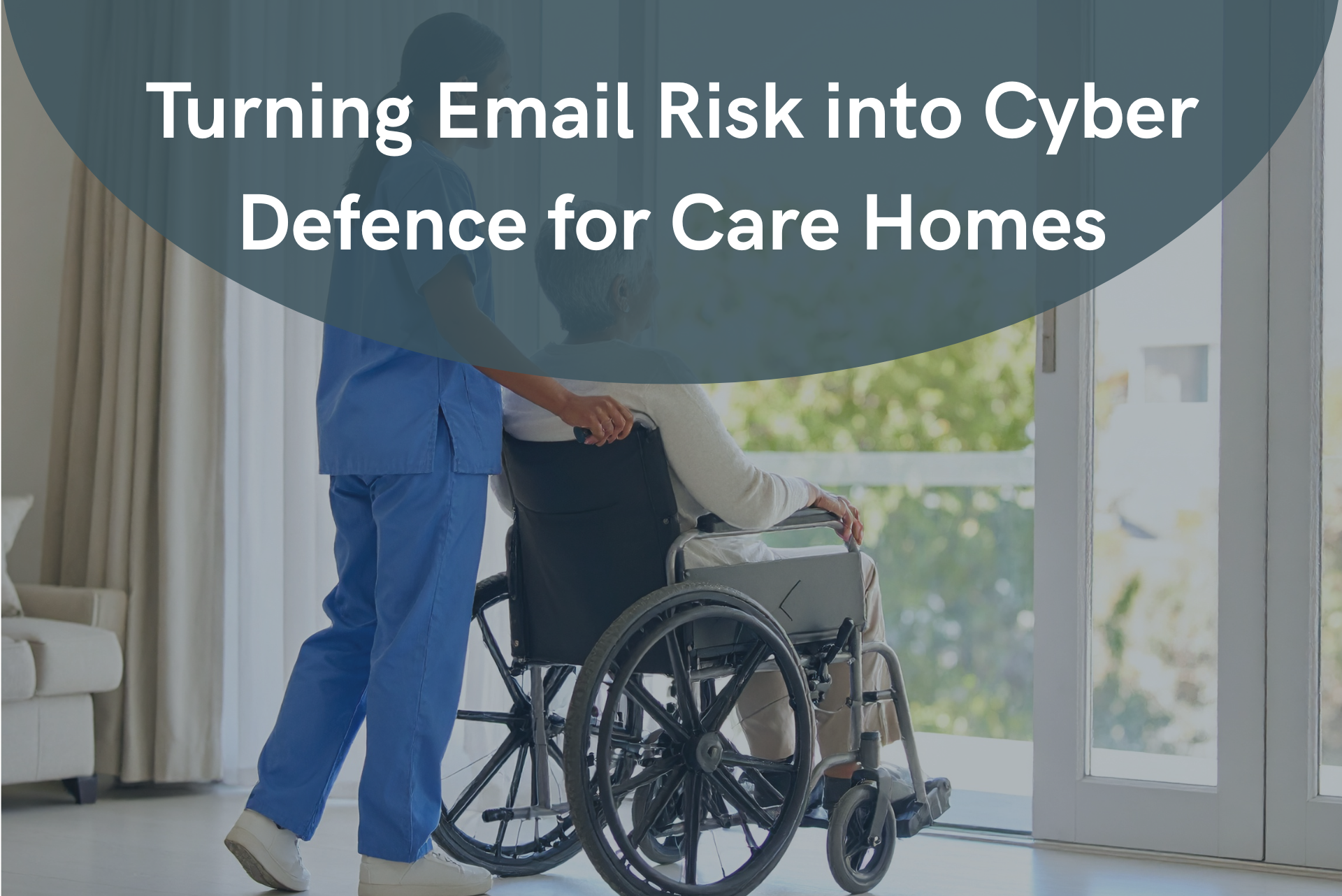


For care homes, email is an essential tool used daily for communication with families, healthcare professionals, suppliers, and regulators. But it’s also one of the biggest cybersecurity risks. Over 90% of cyberattacks begin with an email, and the healthcare sector is a prime target because of the sensitive information it holds. 


At Cranborne, we understand the unique pressures care homes face. Protecting resident data isn’t just a legal obligation under GDPR and Care Quality Commission (CQC) standards it’s critical for maintaining trust and safety. 


The good news? With the right approach, your care home's email system can become a powerful defence against cyber threats. 


Why Email Is a Target for Cybercriminals 


Care homes handle highly sensitive personal information resident records, medical data, payment details making them attractive to cybercriminals. Hackers exploit busy teams, high staff turnover, and a lack of specialist IT knowledge to launch attacks via email. 


Threats can include: 

  • Phishing scams impersonating healthcare suppliers or family members 
  • Malware hidden in attachments 
  • Ransomware links that lock access to vital systems until a ransom is paid 
  • Business Email Compromise (BEC) attempts, where attackers impersonate managers to divert funds 


Without the right safeguards, a single malicious email could result in: 

  • Data breaches 
  • Disruption to care services 
  • Significant fines under GDPR 
  • Long-term damage to your care home’s reputation 


Key Steps to Strengthen Your Care Home's Email Security 


1. Staff Training in Cyber Awareness 
Your team is the first line of defence. Regular training helps staff spot suspicious emails, verify unusual requests, and avoid falling for scams. Frontline carers, admin teams, and managers all need clear, practical advice they can apply every day. 


At Cranborne, we recommend frequent, bite-sized training sessions to fit around busy care home schedules. 


2. Phishing Simulations 
Running phishing simulations helps care home staff practice spotting fake emails in a safe environment. These exercises are proven to increase awareness and reduce the chances of real attacks succeeding. 


3. Advanced Email Protection 
Basic spam filters aren’t enough anymore. Care homes need smart, AI-driven email security systems that can block sophisticated threats before they reach inboxes scanning for unusual behaviour, dangerous links, and fake sender details. 


4. Extended Detection and Response (XDR) 
XDR tools monitor not just your email but your entire care home IT environment laptops, WiFi networks, cloud systems helping spot cyberattacks early and react quickly to stop them spreading. 


5. AI as a Defence 
Cybercriminals are increasingly using AI to create smarter scams. Care homes can level the playing field by using AI security tools that adapt and respond to new threats in real time providing better protection than traditional security solutions. 


Why Email Security Matters More Than Ever for Care Homes 


In today’s care environment, with remote consultations, digital record-keeping, and increasing cyber threats, care homes can’t afford to leave email security to chance. 


A breach could mean more than just lost data it could impact resident safety and cause serious compliance issues. 


By investing in: 

  • Staff cyber awareness 
  • Advanced email protection 
  • Strong detection and response systems 

… care homes can stay protected and continue to provide safe, high-quality care. 


At Cranborne, we specialise in helping care homes strengthen their cybersecurity posture with solutions tailored to the unique needs of the sector. 


Protect Your Care Home. Protect Your Residents 


Email security is no longer optional. It's a vital part of safeguarding your care home’s data, finances, and reputation. 


Get in touch with Cranborne today to find out how we can help your care home turn its inbox from a vulnerability into a strong first line of defence. 


Book your FREE IT Audit and take the first step toward safer, more confident care.  


Cranborne Technologies: Tech that cares.  

Contact Us
December 2, 2025
AI tools are everywhere at the moment, but for most small businesses the real question is simple: can this actually help us day to day? The answer, increasingly, is yes. AI agents are becoming a practical, affordable way for UK SMBs to lighten workloads, improve responsiveness and strengthen their cyber security without adding to headcount. Here’s what they can realistically take off your plate. Take the admin you never get time for Most small teams lose hours each week to tasks like updating spreadsheets, booking meetings, chasing invoices or sorting inbox clutter. An AI agent can handle these automatically in the background — consistently, accurately and without needing to be chased. It’s not about replacing people; it’s about giving them space to focus on the work that actually moves the business forward. Improve customer response times Customers expect fast answers, even when your team is busy or out on site. AI agents can deal with routine enquiries, provide updates, and pass more complex queries straight to the right person. You stay responsive, your team stays sane, and nothing gets forgotten in the rush. Add another layer of cyber protection Cyber threats are rising across the UK, and many of the attacks we’re seeing at Cranborne start with human error — a missed warning sign, a convincing phishing email, or an unusual login that doesn’t get spotted in time. An AI agent can monitor activity in the background and raise a flag the moment something looks suspicious. It’s not a silver bullet, but it’s an extra pair of eyes when you need it most. Support sales and marketing without extra staff From following up with leads to drafting emails and analysing which campaigns actually worked, AI agents help small businesses stay consistent. They don’t replace your voice or your expertise — they simply keep the wheels turning so opportunities don’t slip through the cracks. Help you make better decisions, faster Instead of digging through systems for data, an AI agent can pull together quick reports, highlight trends and spot issues early. That means business owners get clearer visibility without spending evenings trawling through spreadsheets. The takeaway AI agents aren’t a gimmick. Used well, they become part of the team — handling the repetitive, the routine and the time-consuming. For UK SMBs under pressure to do more with less, they offer a straightforward way to improve efficiency, strengthen security and give your people their time back.
December 2, 2025
2026 will be a defining year for UK small and medium businesses. Technology is no longer just a background function – it shapes resilience, productivity, and competitiveness. At Cranborne Tech, we see this first-hand across care providers, financial services, retail, and non-profits. The organisations moving forward are the ones treating IT as a strategic enabler, not a cost centre. 1. Cybersecurity First: A Zero-Trust Reality Cyber threats continue to rise, and insurers now require demonstrable controls. SMBs must embed Zero Trust principles: MFA everywhere, continuous monitoring, dark web monitoring and phishing simulations as part of regular staff training. Security is now the foundation of every digital decision. 2. AI-Driven Productivity AI is now built into everyday tools like Microsoft 365. SMBs can save hours each week through automated reporting, meeting summaries, documentation support, and enhanced customer service workflows. Responsible governance and staff training must sit alongside adoption. 3. Cloud Cost Control Licensing and cloud waste became a major issue in 2024–2025. In 2026, SMBs should focus on rationalising tools, removing unused subscriptions, and right-sizing backup and cloud storage plans. A cleaner, more efficient cloud estate lowers costs and reduces complexity. 4. Modernising Infrastructure Cloud environments are now the default, although hybrid is still operational where needed. SMBs need reliable networks, standardised devices, secure remote access, and infrastructure capable of supporting AI-driven workloads. Modernisation boosts stability and improves user experience. 5. Business Continuity That Works Backups alone aren’t enough. SMBs need recoverability: encrypted cloud backups, offline copies, documented disaster recovery plans, and regular testing. Insurers and partners increasingly expect evidence, not assumptions. 6. Compliance and Governance Maturity Clear policies, documented patching, supplier assurance, and ongoing training form the baseline for regulated sectors. Mature governance builds trust and removes friction during audits or contract renewals. 7. Employee Experience Through IT Smooth onboarding, consistent devices, self-service capability, and proactive support make a measurable difference to productivity. In 2026, IT is a core part of employee experience. 8. Automating Everyday Workflows SMBs can now automate HR approvals, finance tasks, customer service routing, and reporting without enterprise budgets. Small steps create meaningful efficiency gains. Book a free IT audit The businesses that will thrive in 2026 are those treating IT as a growth partner. Cranborne Tech is here to help UK SMBs build resilient, secure, and future-ready digital foundations. If you want to understand how your IT supports your business goals and identify any gaps before they become risks, book a free IT audit . We’ll review your current setup and guide you on the next steps.